Friday, March 11, 2011

Setting limits

Greetings everyone, for the record this is the monthly board meeting of the Sunny Shores condominium, and marina association. If no one objects, we will waive the reading of last months minutes, and get down to business. I see the first item on the agenda is to discuss putting speed limit signs on the condo roads. Yes Bob? I know safety of the residents is paramount, but do you think they are really needed, I mean we only have two very short roads? No, I remember the incident with Mr. Jones and that electric bicycle he bought on E-bay, but he has promised not to pretend he is racing in the Tour De France any more, at least on the condo property. I agree Sam, but they're expensive, and we used most of the money in the budget for the three no-wake signs in our thirty slip marina. Yes Joe, I know we had that near accident, but it wouldn't have happened if Shirley would just stop driving down the middle of the road all of the time. She's lucky to be alive at all. Okay, we have a motion from Ruth to put it to a vote, all in favor say aye, the ayes have it. 

All right what should the speed limit be? That's funny Tom, but this is not the Autobahn. Yes Ethyl? I don't know, five miles per hour is pretty slow. No I understand, but those little teacup dogs are supposed to be on a leash. I'm more worried about stepping on them, than having them run over by a car, and we have eagles, and ospreys around here also you know. How about setting it at 15 mph? No Ethyl, I don't think it's reckless at all, it's the same speed as a school zone. Yes Ethyl, I know that the kids are faster than you are, but the residents are hardly playing bumper cars in here. Thanks Bob, I think I could live with 10mph, but it does seem slow. Come on now Tom, its not like you're going to expire before you get to your parking place. Splitting the difference isn't a bad Idea Ethyl, but that's 12.5 mph, and the standard speed limit sign only has room for two digits. Bob has a motion to set the speed limit at 13 mph, although it seems to be an odd number to me. Alright then, all in favor say aye. Sigh, the ayes have it. Yes Bob? Really now, a radar gun for the safety committee, are you serious? Yes Bob, I know the rules need to be vigilantly enforced, but come on now, a radar gun? All right then Bob, we will add it to next months agenda to talk about.


Okay now, the second item to be discussed is adding a new rule for using the pool that says you can't swim nude. Yes Bob? I agree, anyone who saw Mrs Henderson in the buff will have a very difficult time forgetting it. Okay, lets open it up for discussion.
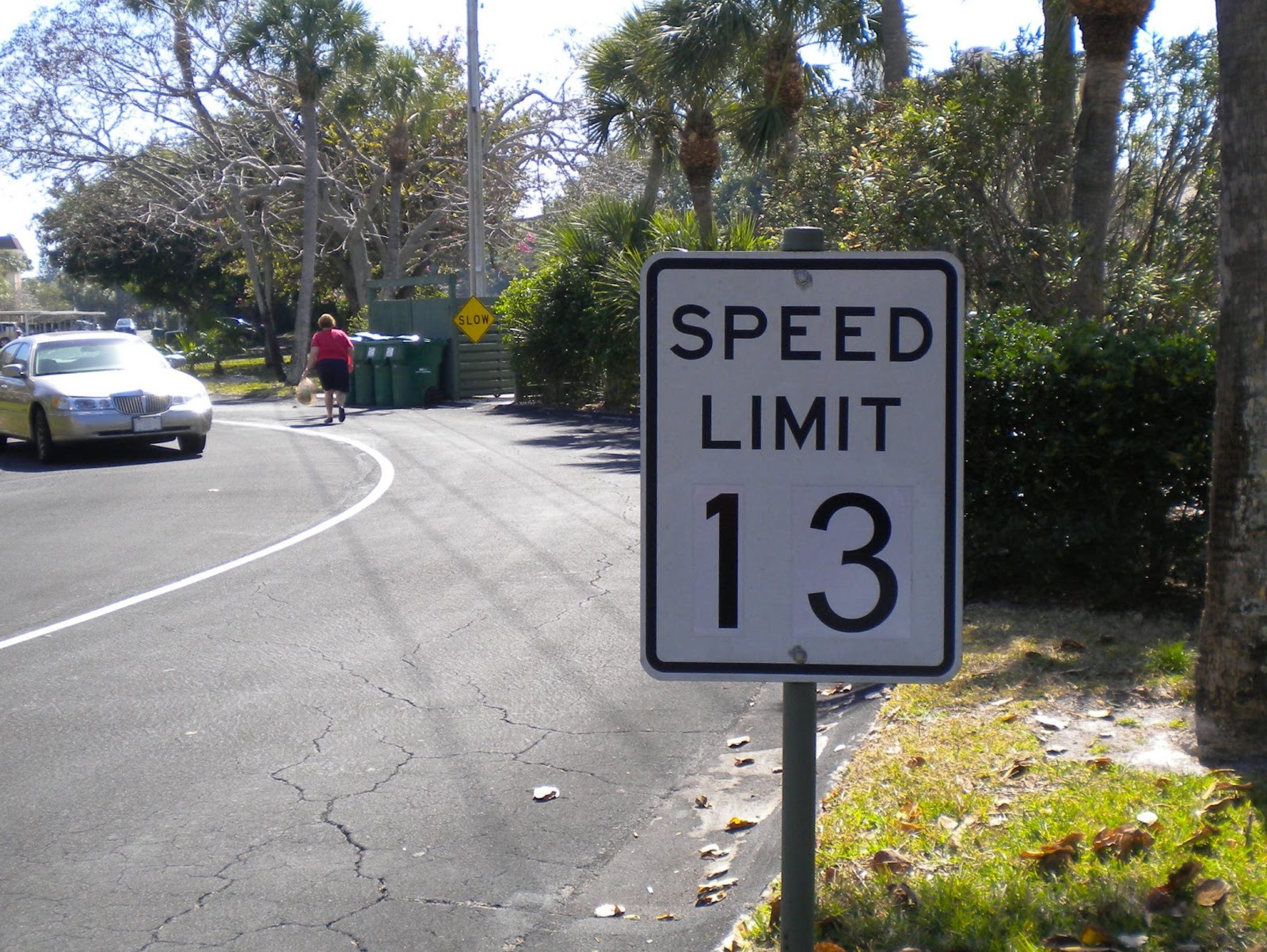


Yes I know it's a bit off topic, but I couldn't resist. I was working at the little marina here, and was bemused about how you could end up at the odd 13 mph number, and the discussion that had to have occurred to get there. So I made one up. I suspect there is some truth to it, in spirit anyway. I always enjoyed Bob Newhart's one sided phone conversations. I'm certainly not as good as Bob, but it was fun to do. I will be more on topic next time, maybe, mostly.

Monday, March 7, 2011

Fisherman Paradise revisited after a make over

When I first saw Fishermans Paradise, I was flabbergasted at the sheer scale, creativity, and raw audacity of this project. She was a beautiful vessel, magnificently outfitted, and every thing on the inside, and from the deck up sparkled, but her hull's original paint job was marred by both construction activities, and the time at sea.   


Trumpy Time In SRQ

John Trumpy Sr. came to the US in 1902 after training as a naval architect in Berlin Germany, and in 1908 he was hired as a naval architect by the Mathis Shipbuilding Company. This begins a collaboration that produced some of the most famous, and glamorous yachts of the period, and it all ended in the very early seventies with the advent of fiberglass construction, and labor problems. About 300 of these wood yachts, or in my view "art in wood" were produced, and the owners had names like Dupont, Firestone, and Chrysler. You didn't go to dealer to buy these vessels, you met with Mr. Trumpy, commissioned a design, and then had it built. Owning a "Trumpy" was the pinnacle of yacht ownership for many decades. Freedom showed up at the Sarasota Yacht Club for a few days, and I was able to take a few pictures of this elegant yacht.


Monday, February 28, 2011

This should be easy, it's in plain sight.

If I had even the smallest clue that this would have been such a painful exercise, I would have dragged my camera out at the beginning to show you the original charger in place. Instead you just get to hear my musings, sans the interesting vitriolic cursing I was muttering while trying to get the original charger out.


Friday, February 25, 2011

Watson buys a boat


Hello Mr. Installer, My name is Watson, and I need some help to buy a boat.
I would be pleased to help you buy a boat Watson. Boats are expensive, do you have any money?
Yes I have money, I just won a quiz show on TV, and my parents are also very rich.
Okay Watson, what kind of boat do you want to buy?
I want to buy a good boat with my money.
How do you define "Good" Watson?
It must be well designed, and very easy to maintain. It should be made of materials that will not rust or corrode. I also want all CAD, wiring diagrams, and a complete bill of materiels to come with it.
Ahem. This may not be an easy boat to find Watson. Boats are not easy to maintain, and you do not get wiring diagrams, or other technical information about most boats when you buy them.
Why are boats so difficult to maintain Mr. Installer?
I think the problem is that the designers never have to fix, or install things on them, or they wouldn't design them that way, and the marketing departments try to jam to much equipment into too small of a space. I think all designers should spend a year working for one of their bigger dealers. The end result would be better boats, but alas Watson, that is not likely to happen.
That is non sequitur Mr. Installer, why would someone buy a boat that is hard to maintain?
I think that often buyers just don't know any better. They are not as smart as you are Watson. By the way, you're a pretty big guy, you will need a very large boat.
Yes I am big. I am about the size of ten food cooling appliances, but I plan to use tele-presence to run my new boat. I want to feel the atmosphere flowing over my sensors.
Ah,  elementary my dear Watson, I may be able to help you after all. Take a look at this boat Watson.
I like this boat very much. I will communicate with the designer. Ha Ha Mr. Installer, "What is a literary reference from the Sherlock Holmes books".
You're very smart Watson, your parents must be very proud.
My parents are very proud of me. Thank you Mr. Installer.
My pleasure Watson.


The photograph of "Spin", the robotic sail boat was taken by its builder Chris Miller who is currently adapting some of "Spin's" technology for the Emirates Team New Zealand America cup challenge. Thank you Chris, it is the perfect boat for Watson.


You can learn more about Robotic sailboats at the Microtransat competition website.


The Avatar is Watson's and is no doubt the property of IBM, so don't yell at me, I was nice to Watson.


A little side note about Watson. What you saw on Jeopardy, other than witnessing the fact Alex Trebek can also be condescending to computers, was a huge move forward in the area of Natural Speech by computers. Unlike early Chatterbots like Eliza  Watson truly has an understanding of speech nuances like puns,  metaphors, et al. I think Watson is very close to passing the famous "Turing Test". I was amazed at the capabilities Watson had.

Sunday, February 20, 2011

It's Just Ducky it's a LARC V

The LARC V (Lighter Amphibious Resupply Cargo-5 ton) was designed in the very late fifties, and went into production in the early sixties. The LARC V was the smallest of the LARC family with a 5 ton payload. There was also a LARC XV (15 ton), and a LARC VX (60 ton). An earlier version of the LARC LX was called a BARC. About 900 LARC V's were built, and about 600 were sunk as a means to dispose of them as the US pulled out of Vietnam. That left about 300 vehicles. A few LARC V's are still in active service, both in the US, and abroad, but not many are left today.


This is one of the few remaining LARC V's, and don't confuse this with the DUKW vehicles that were used in the WWII, and are still used today for "Duck Tours" in many locations in the US, and elsewhere. Lets take at look at captain Leonard Stewart's "J. B Dolphin", whose keel was laid in January 1966. This is one of the few businesses where you need both a captains, and a commercial drivers licence. 


It is actually both a decent boat, and not a bad vehicle on the ground, but to get the functionality of both, there are always compromises. The LARC V is all wheel drive, and on land it can do little less than 30 mph, but it has no suspension. You would really have to hang on tight on a bumpy road at 30mph. 


Propelled by a single screw, its max water speed is about 10mph. It certainly would be classified as a full displacement vessel. Turning the steering wheel, turns the rudder, and the front wheels at the same time. The large front tires help to turn the LARC V.


The LARC V is actually a very sturdy vessel, and I would deem it to be more seaworthy than it might appear at first blush. Unlike its older relative the DUKW which is a WWII vintage craft, the LARC V has an excellent record in this type of tour operation. Three LARC V's were used in very high winds, and seas to rescue passengers on the Nella Dan which ended up on the rocks at the sub antarctic island of Macquarie.


The "Just Ducky" tour starts in Nokomis Florida, and drives through Venice to the old train station where it enters the water, and travels north in the Intercoastal Waterway back to Nokomis. This is a tough vessel to ground, especially when you consider it can just drive over a sandbar, and back into the water again. I have some clients that could use this type of technology.


Very safe, a lot of fun, and a real local piece of boating naval history. It was fun to spend some time on it, and many thanks to Captain Stewart for taking the time to talk with me.

The first photo of the LARC-V is from Wikipedia commons.

Magnifico Yachts sealant application memo

17 Feb 11
Magnifico Yachts inter-company memo
From: J. P. Grunion  - President
To: All employees
Subject: Poor sealant application


It has been pointed out to me by marketing staff, that employees are not doing an adequate job of sealing conduit pull locations, and we must improve this vital function. Because of this, we have retained the renown installer Steve Stickus who is a past winner of the prestigious S.M.I.T.E awards to provide special training classes for all employees on adhesive sealant application techniques.


To achieve this end we have also purchased new, state of the art high pressure sealing systems with 1000 psi compressors, and high flow volume application guns to insure that all employees have the right equipment to perform this critical task.


Our goal is to provide the worlds finest yachts, and if each end of conduit wire pulls need to be very well sealed, then we should do our very best to insure this happens. We certainly wouldn't want anything to get into these pulls after we ship the yacht. 


Corporate training staff will send each department a schedule for the employee sealant training next week. These will be four hour courses, and a certificate for completion will be awarded to each employee. The Sales and Marketing departments are excused from taking this training due to the corporate planning meeting scheduled in Las Vegas next week.


 Thank you for your cooperation in this important endeavor. J.P. Grunion, President - Magnifico Yachts  


It just beats the crap out of me why they would do this. This was part of the pull from the hardtop to the console. The one place where water could get in was not sealed at all. The place that water could not get in at all was sealed to the max. It took about a half an hour of hacking and slashing to get this rubbery goo out of the pull ends. The cables I had to pull were radar power, radar data, N2K, VHF antenna, and XM audio, and you know they would have all fit through that small 1/2" piece of split loom, right?

Tuesday, February 15, 2011

Boatswagen

In this vignette we start our recipe with a 16' Arkansas Traveler ski boat circa 1961.


To this we add a 1971 Volkswagen.


Add equal parts of creativity, good engineering, and elbow grease, stir vigorously, and you end up with a Boatswagen. I spotted this cool little vehicle while pouring copious quantities of expensive petroleum juice into my truck, and had a couple of minutes to chat with the owner, aka Captain Buzz.


This is a very clever, and well executed vessel, or car, depending on your outlook. The details are endless and even include a bimini top and a hailer system. I'm not sure what the genesis of this project was, but I could imagine a couple of guys sitting around with adult beverages when a sudden epiphany struck, and I hope they saved the cocktail napkin the first sketches were made on.  


Everyone is familiar with the Volkswagen piece of this vehicle, but most don't know about the boat part. Arkansas Traveler boats were built by the Southwest Manufacturing Co which operated from 1959 to about 1967. The boats were also sold by Sears, which in the end caused the companies eventual failure. The company put all of its efforts into the Sears account, and badly neglected its original dealer base. When Sears switched to another boat company, the Arkansas Traveler dealer base was so damaged, that the company never recovered. It was a case of too many eggs in one basket. It was a shame, because they built sturdy, and very attractive small boats.


A lot of effort went into keeping the boat part of it real, including the steering wheel on the starboard side, and the engine shifter. The bow light is there, along with an anchor light. There is a prop at the transom, trim tabs, and even a rod holder. What fun, I'm jealous. This craft has recently completed a 7,575 mile trip traveling from Venice Florida, to Venice California, and return, and still looks shipshape, and bristol. Along the way a documentary was being made, and the trip was in part to raise money for the crews favorite charity Habitat for Humanity. This is another thing I want for xmas, but I suspect that this desire will be added to my vast collection in my Museum of Shattered Dreams.


As I said, what fun, and you can read about their adventure at Boating Across America, and for VW lovers, lots of cool pictures.


Sunday, February 13, 2011

Boat warranties, big brother is really watching you.

The letter excerpt below was sent to the owner of a new boat. The owner was being advised by the manufacturer there would be no warranty coverage on the boat because they had determined, via the internet, that the boat was being used for commercial purposes.


I have spent a lot of time reading boat and motor warranties the past couple of days, (an excruciatingly dull, but informative task), and almost every one has a specific warranty exclusion for "commercial use", and several additionally spelled out the fact that this included the use of the boat in anyway that created revenue. What was interesting about the letter, was apparently this manufacturer was searching websites for their boats being used as fishing charter boats, and the ilk. They were then cross referencing the names found on the websites to their owners list, and if there was a match, the owner was sent a letter advising them their warranty was voided.

What was unusual in this case, was the fact that the picture on the website was not the boat in question, but a several years older version of the boat, that had recently been sold, and a new one, of the same make, and model had been recently purchased. In this case it would be like trying to tell what year Volkswagen it was from a picture. The owner occasionally did day fishing charters. This was more of a hobby, and a retirement project, rather than a money making operation. The owner unfortunately passed away shortly after the purchase of the new boat, and it is not known if the new boat was used at all, much less commercially, or otherwise. But since he had used the old boat commercially, the manufacturer has said that the new one was surmised to have been used commercially, so the warranty is kaput, and they won't discuss it any further.

I did a little test to see if this was an effective way to identify commercially used vessels, and it is. I Googled charter boat images, and found lots of newer boats being used for chartering, and most of them did not have logos blazoned across their hulls, that would clearly indicate that they were being used commercially.

So big brother, in a creepy, and not necessarily always in an accurate sort of way, is truly looking over your digital shoulder. This type of digital surveillance, and warranty voiding increases the builders net profits, in an environment where there are not a lot of profits. Now just to be clear, when you buy a new boat, most certainly your warranty will have a "commercial use" exclusion, but I wonder if it really makes sense for many builders to have that clause, in such a severe, and black and white way.

My take on this is you should want to encourage charter operators, fishing teams, and other related businesses to use your products, and by telling them they won't have any warranty when they buy their new, and often expensive boats, seems to me to be a real disincentive. The message being sent, is that the product won't hold up under real use, like using it often for fishing. I think this approach also hurts dealers who sell the boats, and do the warranty repairs. Since there is no warranty, most will seek the least costly approach to repairs, and that is not likely to be the dealer. This also encourages the use of after market parts, instead of the official, and often pricey original manufacturer's parts.
So who does this impact, charter boat operators, who are struggling in this economy, nature cruise, boat rental, and local sightseeing companies, fishing teams, and anyone whose boat is sponsored by anybody, for anything. There are a couple of bright spots I came across in all of this digging. Trophy boats allow up to 50% commercial usage, and Yamaha, and Honda both provide a 1 year warranty for commercial usage. Mercury's warranty stuff is so scattered, and complex that I couldn't really tell if they offer any commercial use warranty at all. I think they do, I just couldn't find it, and I eventually gave up. I understand the racing exclusion, and some of the others, but maybe manufacturers should rethink what they're doing, and cut some slack on the "commercial use" warranty exclusions, unless your product is made for only occasional light duty use by your grandmother on Sundays.

Thursday, February 3, 2011

The world is not flat

This should have been an easy job, and it would have been if the guy who designed this helm, had not been a frustrated artist, with a curvaceous fixation. There was an older chart plotter/sounder mounted in the hole, and the task at hand is to mount a Garmin 5212 into the console. But beware, the eye can fool you.


I put a piece of blue tape on the console to show you what you can't easily see in the picture above. The console gently, in a pain in the ass sort of way, curves forward leaving only about 7" of actual flat space to mount anything. This is one of those worst case examples of function follows form. Pretty, sort of, pragmatic no.


There is always a way, and in this case, the answer is a white acrylic wedge to fill in the inevitable gap that will exist at the top of the chart plotter. I have three words to describe making this wedge. Fiddly, fiddly, fiddly.


Annoying problem number one is to find a reference for level, and there isn't one, and I will come back to this later. So I started with a straight edge, and marked where the flat surface started at the bottom of the console, and where it ended near the top of the console. It turns out that this is about 7", and I need 9" and change. I took a piece of cardboard, and spiled it to fit the curve. The cardboard, now matching the curve, was taped onto the console, and using a straight edge, the flat console plane was extended upward with a pencil line on the cardboard. Laying the cardboard template onto the chart plotter template allowed me to measure the height of this little wedge fabrication, and to see where the bottom edge of the wedge was going to meet the undersides of the chart plotter. All of this work was just to make the small triangular sides of the wedge you see above. Fiddly was an understatement.


So clutching the template, I go off to Delcraft and spend half an hour drawing little pictures, and explaining to Bob what it had to look like, and a couple days later I have the part in my hands.


I know about where this wedge needs to be, and I have about +- 1/4" of play up, and down in placement on the console where the wedge matches the curve. To get some sort of reference, I took a flat piece of plate aluminum that was about a foot square and laid it onto the top of the console, and slid it over the edge of the console. I could them measure up to it, and make the wedge parallel to the plate, and the top of the console. This was as good as it was going to get.


I epoxied the wedge onto the console, taped on the template, told the boat to turn its head and cough, and in a few minutes, the rotozip had done the cutout. This worked out really well, and looked great in the end, but a little bit of foresight on the part of the designer would have made this a short and sweet job. There was enough, just barely enough space behind the console for the unit to fit, which is another thing I would like boat designers to think about.

So what does the installer want the designers to consider? You need flat spaces to mount gear in, so please provide it. Leave plenty of room behind the console, deeper is better. Don't do that Cyclops Syndrome thing, and mount things right smack in the center of the console. There should always be room to mount the primary chart plotter directly in front of the helm operator. Another small gripe I have is with the templates I have to use. I think it would be a good idea to have bold, and straight reference lines both vertically, and horizontally on the templates to give both my eyes, and tape measure the best chance of getting it located correctly, especially when units have curved surfaces. I'm going to keep nagging until I see some real progress here in helm design and layout.

Wednesday, February 2, 2011

Morons

"Hey Lefty, I gots an idea for a job. We could heist a boat, hide it in Miguel bay, and strip it down at our leisure." I don't know about that Niney, remember when you blew off your finger trying to open that safe with dynamite? What do you know about driving a boat?" "I knows that they float, and it has a steering wheel. It's just like driving a car off road Lefty."

This is the end result, of a boat that was stolen from a local marina. The thief, or thieves had enough of a skill set to start the boat, and get it out of the marina, but apparently they were bereft of even the most basic navigational skills. The boat's aft end is pointed towards Tampa Bay, and......


The boats bow is pointed towards Eds Key. To say that Eds Key is a real piece of land, would be a misnomer. This part of Tampa Bay's shoreline consists primarily of mangroves, which abhor any land that is not continually drenched in salt water. Mangroves also require lots of mosquitoes, gnats, and spiders the size of sneakers to survive. 


I marked the chart (D'oh!) where the boat ended up. The Coast Guard had opined that they didn't believe the grounding was intentional, no doubt because they had to be moving at a good clip to get that far up on the grass flat. Obviously the helmsman "knew those waters like the back of his hand," and didn't need a chart.

For those who are not avid readers of paper charts, that light green area is a shoal, and in this case, it is a grass flat. Birds stand on grass flats, and your boat can only go into those places, once. All of those very low numbers are the water depths. There is very little water here, and as you can see from the pictures of the boat, especially where it found bottom. 


The good news was, as you can see, there was little chance of drowning, and since the perp, or perps were not around, we can all surmise they just walked to shore swatting mosquitoes as they went. That black line at the top of the chart curving up at the left side is the southern end, west side of the Sunshine Skyway bridge, and it is lit up like a Christmas tree at night. And a note to the perps, don't give up your day job, thinking you can make a living stealing boats, until you have taken some boating courses that include chart reading 101. Morons, just morons.

Many thanks to Alicia Sebacher who graciously allowed me to use her photographs. 

Saturday, January 29, 2011

My sonar is chirping, what up?

This is my modest attempt to illuminate the readers about the recent advent of "chirp" fish finder systems in the marine market place. This is impressive technology, and if you really want to find fish, this emerging technology can do it for you. So lets start this off with the basic math involved in understanding "Chirps" and in particular, the linear chirps that are being used.  

In a linear chirp, the  instantaneous frequency   f(t ) varies linearly with time:
f(t) = f0 + kt
where f0 is the starting frequency (at time t = 0), and k is the rate of frequency increase or chirp rate. The corresponding time-domain function for a sinusoidal linear chirp is:


So with this in mind, we can now move on to intelligently discuss the DSP (digital signal processing) and some of the techniques involved including Fourier transforms, and I'm suddenly not feeling very well. I'm afraid. Dave, my mind is going. I can feel it. My instructor was Mr. Langley, and he taught me to sing a song. If you'd like to hear it I can sing it for you. Daisy, Daisy....  

At this point I am going to dumb this exercise way down to a level that I hope most will understand, and that certainly includes me. So begin by clicking here, and playing this active sonar ping, and then come back. Good to see you back. What you heard was a representation of the type of sound, or pinging (also called a tone burst) your depth sounder's transducer makes. Now click chirp, (you might have to download it first) and pop on back. Instead of a single frequency being pinged, the chirp sweeps across a band of frequencies. The chirp transducer might send out a chirp that starts at 130 kHz, and ends at 210 kHz. The picture below is a graphical representation of what a chirp looks like starting with a low frequency and chirping up to a higher frequency. The starting frequency, and the ending frequency define the bandwidth of the chirp, and hence the term "Broadband" sonar.


So what's the big deal here? Your current transducer, and sonar works well, but it has some limitations caused by those so called laws of physics, and they are difficult to overcome. Even congress can't change them, but keep an eye on them, they might try. The shorter in time your ping is, the better the target resolution, but the less distance it can travel through the water. The longer in time the ping is, the further it travels, but you end up with less target resolution. So in the end, physics always win, and you get a compromise between power needed, ping duration, resolution, and yes cost. 

"Chirping" has been around since the fifties, and an early application of this technology was for radar systems, which have the same kinds of issues a sonar system has. Chirp sonar systems have also been around for a while, but due to the cost of the technology (much less expensive now), it has mostly been available only to research organizations.

When you emit a long chirp, it has a very clear acoustic signature, unlike its cousin the single ping. The return echo can then be matched, and compared to the originally sent chirp signal. This allows for more precise target discrimination, and since the sweep is over a greater range of frequencies, targets that might not be seen well at one frequency, may be seen by another frequency in the chirp. Since the chirp has a long duration, it penetrates further (deeper) with less power required (the loophole in those pesky physics laws). These systems can potentially chirp simultaneously on both low, and high frequencies, to provide even greater detail and information when processed.

This is not simple technology, and it takes some serious, and dedicated computer processing to achieve. It also requires a special transducer to do this, so don't go thinking you can use your existing transducer. In addition there is a correlation between the power of the transducer, and its performance, especially in deeper waters. The good news is that the resolution improvement is four to five times or more better than current technology. This is a software and hardware solution, and given some time, I would expect these systems to get even better, and less expensive. There are also scenarios where these systems can identify specific fish species.

So pay attention to this stuff. Simrad introduced the first pleasure/fishing boat chirp sonar covered by Panbo, and I suspect at the upcoming Miami boat show, Garmin, Raymarine, and the other manufacturers, will be showing off this technology. If they are not quite there yet, they will be hot on Simrad's heels. I would also expect that although somewhat pricey now, as this technology is adopted, the prices will drop. Check in with Panbo.com to see what Ben finds out about this emerging technology during, and after the Miami boat show.

Many thanks to Simrad YachtingAirmar, and the others for letting me pester them while trying to understand how all of this works, I'm smarter now, but my brain is still reeling. This was an odious little task, and it's time for a bourbon now.


"Any sufficiently advanced technology is indistinguishable from magic." Arthur C. Clarke


The active sonar ping is from the Free sound project
The Chirp, its graphical image, and the equations are from Wikimedia.org/
I did crib a couple of lines from 2001, a Space Odyssey


and.... If I made any bad technological errors, let me know. Bill

Monday, January 24, 2011

UFO's and J boats at the same time.

There is a reason RIBs (Ridged Inflatable Boats) are favored by search and rescue organisations. Fast draining, lots of flotation, lightweight, and can handle low impact collisions with no problems. But look at this elegant version of the sturdy RIB. Add beautiful lines, a carbon fiber hull, and lots of amenities and you have a UFO 69. The one you are looking at is the only one in the US, so I am thinking not a lot of people have seen this vessel. RIB pleasure craft have been popular in Europe for a long time because of the fuel savings, and this sleek vessel should alter your perspective of an RIB being more than a stodgy, and wet, hard riding dingy.


This UFO 69 (23') is commodious, and packed with lots of nice features. A Garmin 4208 chart plotter, and sounder module, ICOM VHF, lots of seating, and real teak decks. Add to this a thumping Fusion stereo with bazooka sub-woofer, refrigerator, blue OceanLED underwater lights, and there is even a wakeboard hook. In sum, it's both a terrific fishing platform, and an elegant day cruiser all in one. It looks fast sitting still, cruises at 35mph, and has a top end of 53mph, and this is all done with a single Honda 225hp 4 stroke. With the speed of twin engines, coupled with the fuel economy of a single engine, it's no wonder why they are so popular in Europe.


The aft of the boat has an open transom for quick draining, and a telescoping swim ladder is under the port side of the transom. If you look closely, you can see the fresh water shower system also on the port side.


The hull is carbon fiber epoxy with  a tunnel, and there are two steps built into it. If you look at the first picture at the top, what appears to be black on the hull is actually clear coated carbon fiber. Gorgeous to the eye, but very hard for me to get a decent picture of. 


This is a picture of a hull in fabrication, I lifted from UFO Boat's website showing the tunnel and the steps formed into the hull.


There is yet another cool feature to talk about. Mounted under the helm seat is an inflation, and deflation system. The vessel has a beam of 10' 5", and in Florida, the maximum trailer-able width without a permit is 8' 5".


With a wide 10' 5" beam, the answer to this transport problem is you deflate the tubes with the vacuum system, and in just a couple of minutes they are sucked into the hull, and you're now legal to haul it on a trailer


All in all, I was most impressed, and I'm not easily impressed. Sleek, safe, fast, fuel efficient, loaded with toys, and a sticker price of about $100K. I know it sounds stiff, but compare it with the price of a new Boston Whaler of about the same length, and it looks very good to me.


Now for part two of the story. What would be the odds of finding two shiny new boats I had never seen, at the same place and time, with a full camera battery? This is hull #1 of J boat's new J/108 shoal draft cruiser line, although I kind of hate to call it a "Cruiser", because it screams performance to my eye. The cockpit is large, with an open transom, and it's set up for single handing, including raising, and lowering the centerboard. 


The first thing that jumps out at you is the twin rudder set up that not only allows you to turn on a dime, and give you back nine cents change, but also allows you to gracefully back down into a slip, without all the cursing, and frantic gyrations I have always been used to. To be honest, any attempt to back down my sailboat generally resulted in a frantic abort, and stuffing it into dock bow first. I'm envious.


The very J boat bow features a fixed sprit that will accommodate a second furling headsail, an integrated bow roller system, and anchor winch. Another detail I like about this craft is that there is something to really hang onto if you have to go forward to the bow, while things are rocking and rolling. 


Despite it's purposeful J boat lines, it really is a very comfortable, full feature cruiser with clean interior lines. It sports a large salon cabin with good headroom, large forward V-berth, and lots of teak trim.


A complete  gallery with lot of storage, refrigerator, two burner range, oven, and a double stainless steel sink.


A real navigation station (something that is now missing from so many boats today), and complete head round out the interior. Lots of ambient lighting, and light colors makes it a pleasant environment to be in.


But the thing that makes this performing cruiser noteworthy is the 3' 9" draft, with the centerboard up. With the twin rudders, and the centerboard up, it still points very well into the wind. If you're racing, you can lower the center board down from the cockpit, and you will pick up a few more degrees upwind. With the centerboard down, the draft increases to 6' 8".


So in the end, this is both a comfortable cruiser, and a true performance sailboat in one package. It is also a striking, and beautiful vessel to boot. It was like Christmas. Two unique vessels stumbled upon on the same day. Both of these boats were leaving for Key West last week, for "Race Week", and were being shown off at the Galleon. And many thanks to Craig Crossley for letting me take the pictures, he was in a hurry, and took the time to indulge me.

You can learn more about the UFO 69, and the J/108 at Cross Current Marine
The interior photos of the J/108 are from the Jboats website
The photo of the UFO 69 hull is from UFO Boats. Your browser should be able to translate it.