Showing posts with label Boats. Show all posts

Thursday, December 20, 2012

The nautical "Twas the Night Before"


Twas the night before Christmas, when all through the boat
Not a creature was stirring, not even a stoat.
The stockings were hung by the nav station with care,
In hopes that St Nicholas soon would be there.

The children were nestled all snug in their berths,
With visions of hardtack, all dancing with mirth.
And mama in her hairnet, and I in my cap,
Had just settled ourselves for a long winter’s nap.

When out on the deck there arose such a clatter,
I sprang from my bunk to see what was the matter,
Away to the port hole I flew like a flash,
Tore open the shutters, and threw up the sash.

The moon on the breast of the calm winter ocean,
Gave the lustre of mid-day to the boat's soft motion,
When, what to my wondering eyes should appear,
But a miniature trawler, and eight tiny key deer.

With a tipsy old driver, so lively and quick,
I knew in a moment it must be St Nick.
More rapid than sea gulls his coursers they came,
And he whistled, and shouted, and called them by name!

"Now Aquaholic! now, Luna Sea! now, Stocks and Blondes!
On, Chum Bucket! On, Ship Face!, and Crossing the Ponds!
To the top of the fo’c’sle! to the top of the gaff!
Now dash away! Dash away! Dash with a laugh"

As canvas sheets that before the wild hurricane flies,
When they meet with an obstacle, mount to the skies.
So up past the mast top the coursers they flew,
With the sleigh full of gear, and St Nicholas too.

And then, in a twinkling, I heard up on my deck,
Prancing and pawing making my topsides a wreck,
As I drew in my head, and was turning around,
Down the dorade box St Nick came with a bound.

He was dressed in foul weather gear, from head to foot,
And his oilskins were salty, wet, worn out and kaput.
A bundle of LORAN's he had flung on his back,
And he looked like an installer, just opening his pack.

His eyes-how they twinkled, his dimples how merry,
His cheeks were like roses, his nose like a cherry.
His bourbon breathed mouth was drawn like a bow,
And the beard of his chin was as pale as fresh snow.

The stump of a pipe he held tight in his teeth,
And the ganga smoke circled his head like a wreath.
He had a broad face and a huge round belly,
That shook as he slurred, and he was so smelly.

He was chubby and plump, a right jolly old elf,
And I laughed when I saw him, in spite of myself!
A wink of his eye and a belch from his head,
Soon gave me to know I had something to dread.

He spoke not a word, but went straight to his work,
And filled all the stockings, then turned with a jerk.
And laying his third finger aside of his nose,
And giving a nod, up the dorade box he rose!

He sprang to his trawler, to his team gave a whistle,
And away they all flew like the down of a thistle.
But I heard him mumble, ‘ere he drove out of sight,
"Happy Christmas to all, and to all a good-night!

Exhausted from St. Nick, and concerned instead,
To my berth I stagger for a few hours abed.
Awaking in the morn, I find all of my rum gone,
And a pile of manure on the deck from a fawn.

I hope you were good, l seemed to have gotten nothing but anthracite.

Merry Christmas, and boat safely from the Installer and family.

Sunday, March 20, 2011

That boat ain't right, a primer.

I'm currently doing a typical job installing electronics on a new boat. It's a 26' T-top center console boat, and it embodies all of the things I wish the owner had looked for before buying it. This boat is mid range priced, and is really no better, or worse than most of them. I'm not going to show you a picture of it, but I have gathered some examples from other boats to demonstrate some of the issues I perennially complain about in boats of this size and style.


I have never actually timed it, but I think that pulling wires from A to B is at least half of the cost of installing electronics, and in many cases, even more so. So it begs the question, why do boat builders make this task so difficult? The other issue involved is why builders seem to have such a difficult time anticipating what kind of equipment their buyers might install, and provide some accommodation for it. This really shouldn't be too hard to do, or are there cosmic forces at work here I just can't fathom? So today I'm talking to the buyers of these boats, and the intent is to help you avoid the worst of these problems in advance, or at least know what the warts will be when you buy your new toy.

So let's start with the T-top, and what to look for. Ninety degree pulls should be avoided if possible, and where you find one, you will typically find two. These turns are difficult to make with wiring. So stand back, and imagine you, yes you, will have to pull a 1/2" radar cable from the electronics box up top, and into the console. You can then also think about how you are going to install the missing pull wire in the first place. Long hemostats, shop vac, magnets, a skyhook?


Monday, January 17, 2011

Buzzzzzzzzzzzzzzzzzzzzzzzzzzzzzzzz

The droning, the incessant buzzing. It never stops. Day in, and day out it's alway there, burrowing through my ears, and into my head It's driving me crazy. Oh please, I beg you, make it stop. My fevered brain searches for a solution. Wait a second, gasoline, and lots of it, I'll burn them out, no, no, dynamite, that will do the trick, uh yes Kate? I didn't hear you. No, I haven't called the beekeeper, but I will do it right now.


Meet Kevin Lausman, an apiologist, and master beekeeper. Here is my problem. A hive of bees has moved into a small boxed in section of my bedroom ceiling almost directly above the bed, and they have been busy. You can hear the droning, and it is time for them to go, permanently. Kevin, and his "in training" associate Tory Uccello are going to do this sweet job. Their goal is to capture the bees, and to relocate them to a new home, which will be located some place other than my bedroom ceiling, far away.


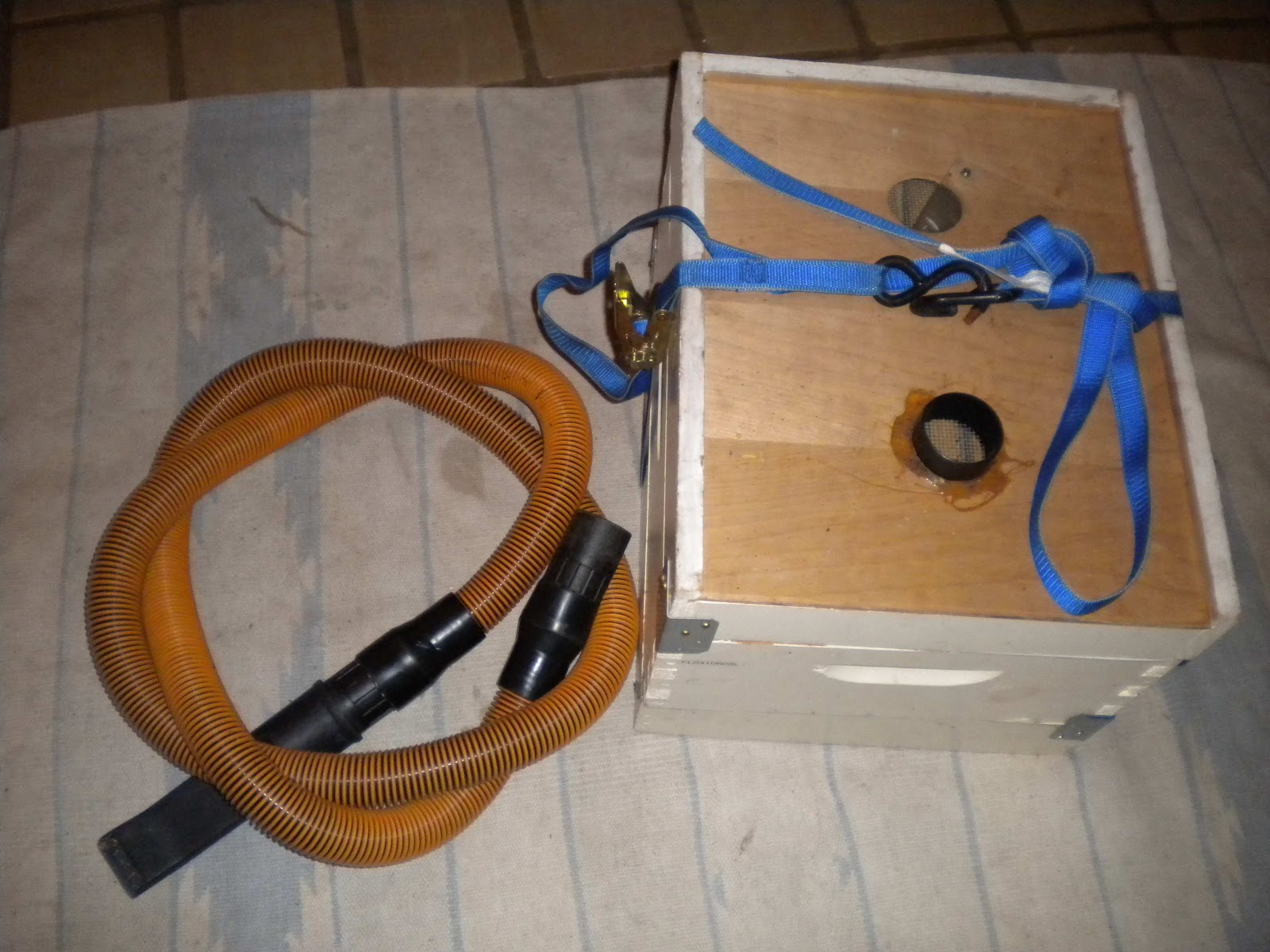
I know there is a tool for every job, but my horizons have been expanded, after being introduced to the bee vacuum cleaner. A shop vac hose plugs into the top of the box, and the bee collection hose plugs into the bottom side of the box. Inside is a mesh screen that the bees can't get through. They get sucked up, and end up in the box without being hurt.


The process of hive removal is fairly straight forward. Using a stethoscope, and a laser thermometer, Kevin quickly sizes up where the hive is, and and starts to cut a hole by the back of the hive. The reason for this is that the more aggressive guard bees are at the entrance of the hive.  


A little smoke is wafted into the hive to help quiet them down, and the hole is enlarged enough to do the extraction.


And there is the hive, looking like something out of the movie "Alien". It actually extends further back (or down in the picture). It was in an area about 18" x 2'  and about 10" deep.


Tarps have been laid down, and Kevin takes a knife, and going from back, to front, starts to cut out the combs. As he does so, there are bees covering the combs, and Tory vacuums the bees off. As the combs are being cut away, Kevin is sorting them. The honey combs go into one bucket, and the combs containing bees in progress, and other things, I guess, go into another. This continues until all of the combs are removed. The amazing thing about this is I'm standing within a couple feet of all this, with no bee suit, and they didn't bother, or sting me at all.

After the combs are removed, Kevin sprays an almond smelling solution in the space that won't hurt the bees, but keeps them away from the hive remains. The bees that were flying around loose in the room all migrated to the light from the windows, and they were vacuumed up off the screens. In about four hours, about 15,000 bees were caught, and will go to a new hive, where they will do hard, but useful labor for the rest of their life. The queen's hive was found, but no queen was seen, although she might have been vacuumed already, or according to Kevin, the hive may have recently swarmed.

I was left with about 15 lbs of honey comb, and instructions on how the extract the honey. The last part of this exercise was to at least temporarily close the hole. I did this with a piece of smoked plastic from a Searay remodel, although looking at Kate's face when she saw it, I instantly realized that opaque anything would have been a better marital solution. I will tape some paper over it. Expanding foam was used to fill the entrance crack on the outside of the house.


The boating tie in is that Kevin removed a hive from a trailered catamaran last week. In this case, the bees were using the transom drain hole as an entrance, and it was fortunate that there was an access plate in the hull to allow hive removal. The problem with this type of infestation, is the hive must be removed, or malodorous things will happen. Dead bees, lots of honey, and wax will result in a bunch of other things moving in to dine on the rotting feast.

There was a scenario where I could have killed the bees with insecticide, and theoretically removed the bees, and hive myself, but Kevin's solution of saving the bees, wax, and honey was more elegant, educational, and very satisfying. This is a job best left to experts, with bee suits. When Kevin first looked at the problem, we were standing outside the house, looking at the bees come and go from the entrance, and I asked him if the bees were africanized. He grinned and said no, because if they were, we would have already been "tagged". I have already discussed rats in boats, and at some point in the future it will be the Black Widow spiders and wasps turn. So much pestilence, so little time, especially when you live in Florida.  

Bees are important, and useful little insects. They play a critical, and important environmental role in the pollination a huge variety of plants, and crops, and their role can't  be replaced by human effort. You can learn more about the role of bees in our lives below.


Kevin Lausman, master beekeeper can be reached at Suncoastbeekeeper@verizon.net


Sunday, August 8, 2010

You dirty rat you, you're going to meet old sparky.


This isn't a glamorous story, but someone has to broach this elephant in the boat. In the wide world of boating, there is hardly a location where you couldn't have a rodentia problem, and boats in Florida, are certainly no exception. Rodents are one of nature's sturdiest mammals, are ardent adherents of Darwin, and can do huge damage to boats. They can fit through tiny places, breed at a prodigious rates, and can gnaw through both wiring, and fiberglass. They use your vessel as a public restroom, leaving behind less than lovely odorous wafts of uric acid. You want your guests to have an experience that will be the talk of the yacht club for years to come? Just have a 14" black fruit rat make an appearance in your cockpit during happy hour. What fun all will have with the screams, spilled drinks, and upset appetizer trays.

Kate and I own a hysterical (it's not a typo) house built in 1956 and designed by Jack West. It is a Sarasota School of Architecture home, and we love it, except for its seemingly endless 5000 sq foot flat roof. One of the nice things about the home, is the line between inside, and outside can be fuzzy, and as a result we sometime get unwanted guests, including "Whipped Tailed Squirrels" (Kate's code word for rats), and other occasional unwanted visitors. Through the years I have become adroit at critter removal, although I'm glad there are no You Tube videos of some of my gyrations during the removal process, and yes, under the right circumstances, I can make some less than manly, high pitched squealing noises whilst under extreme critter duress.

Noah's Ark stopped first in Florida, and got rid of some of his annoyances, and the rat below is an example. This is a Gambian Pouch rat, and can be found in the Florida Keys.


Before you rush to cancel your Florida vacation, most of us don't encounter rodents of this size, but like all places I have ever lived, there are rodents everywhere. Mice, or chipmunks who moved in the ski boat at the cottage over the winter, Norway rats, squirrels and many other local variants. 

So we will start the discussion on how to remove the offending critters from your boat, with what you shouldn't do, and that is to poison them. It does them in for sure, but the typical result is they crawl into some inaccessible crevasse in the boat, and then die. Not good, period. The smell of an overly ripe, bloating member of the rodentia family is not what you want on your vessel. Do you remember the urban legend about the new Corvette that was on sale for $500? The catch was the owner died in it, and you couldn't get the god awful smell out of it. After watching "Myth Busters" test this legend with a Corvette, that had a couple of dead pigs inside it, and from my own personal experience, I find this to be excruciatingly true. It is almost impossible to get the smell out.

So the second option is traps. They come in many flavors, and designs, ranging from the very basic finger mashing, spring loaded medieval traps we all know, to high tech devices.


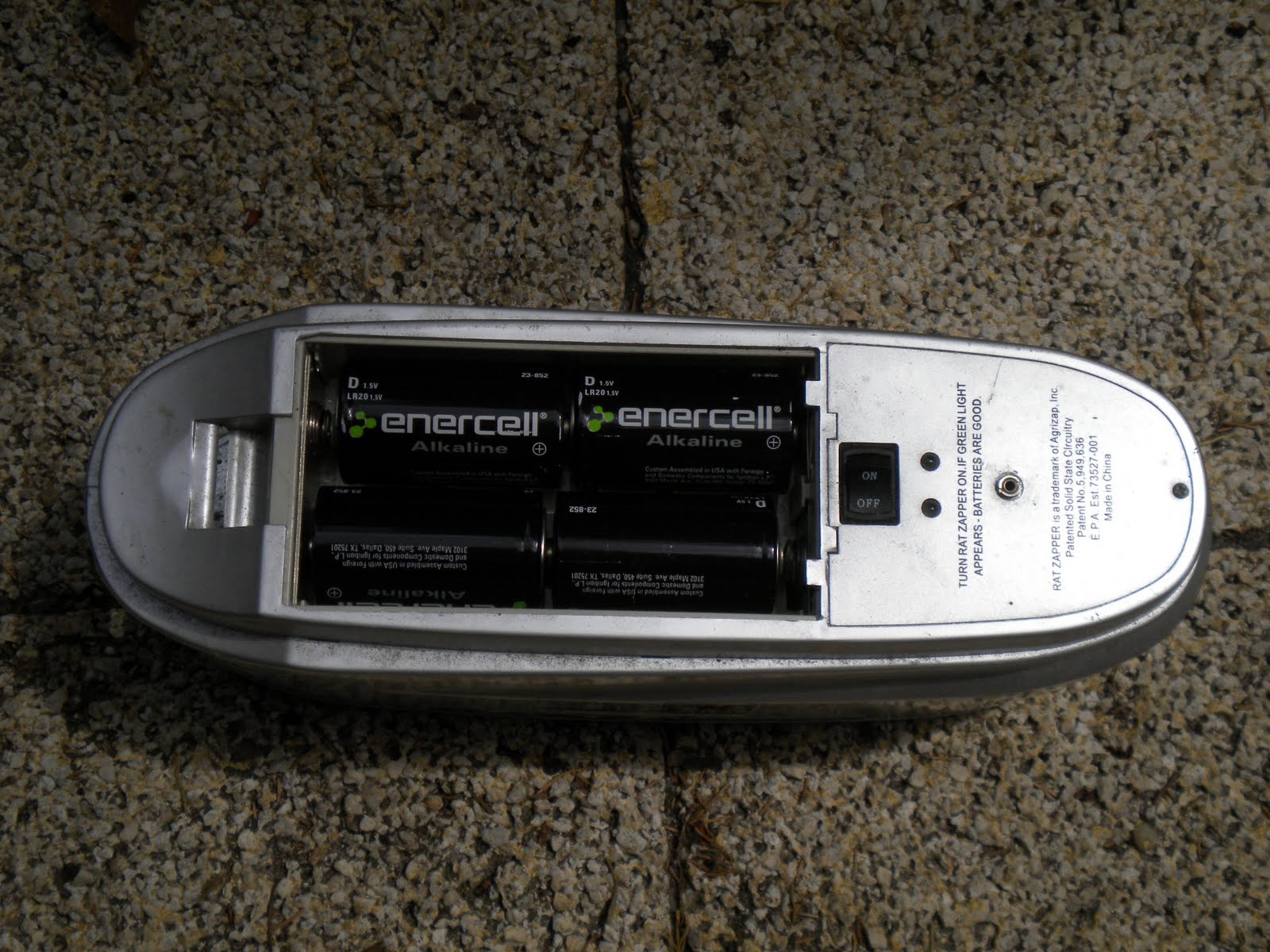
Since I can profess to some experience in this field of endeavor, I am going to introduce you to with a drum roll to the Rat Zapper 2000, or as we affectionately call it, the "RZ2000, Harbinger of Death".


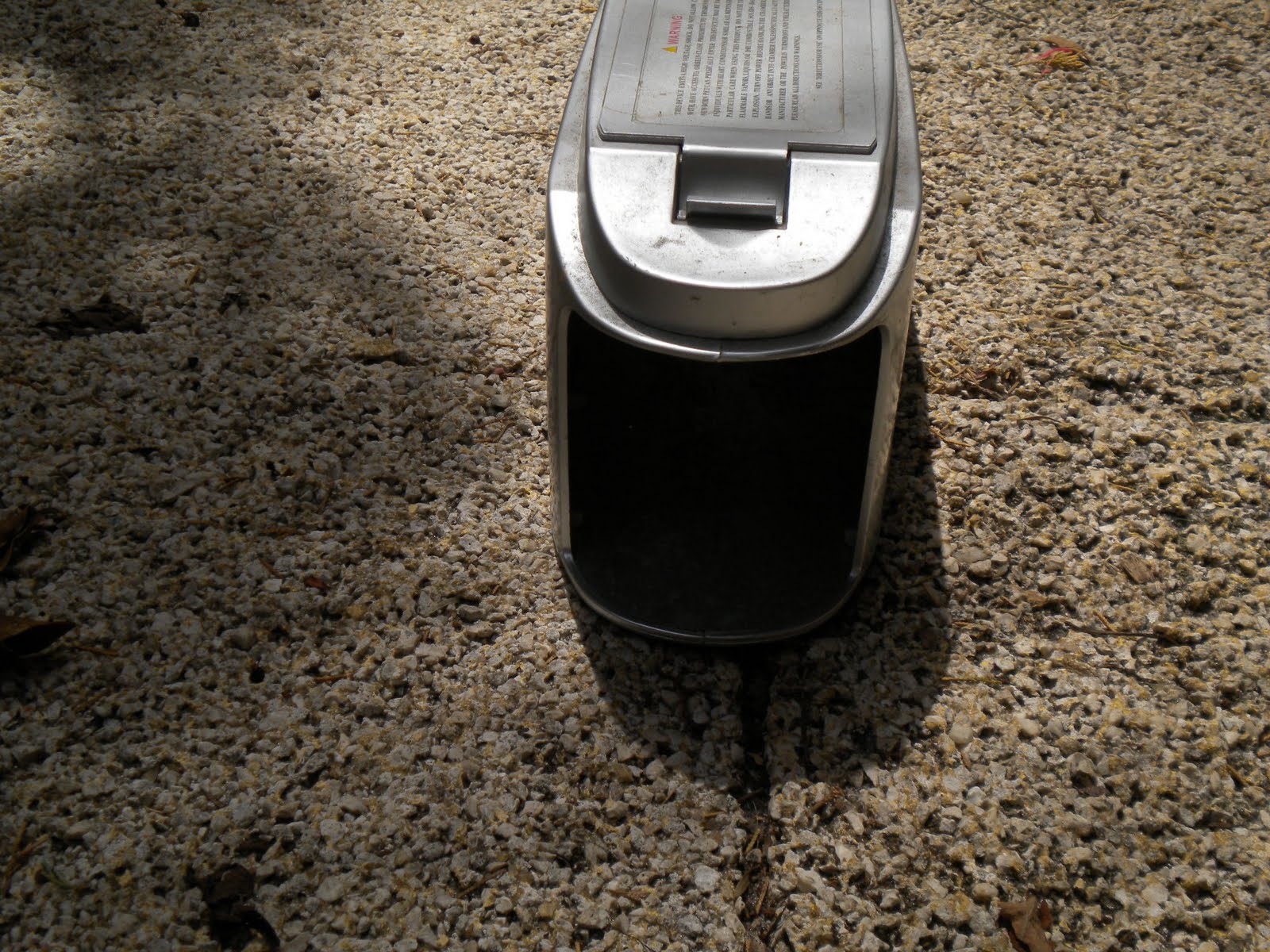
This is a technological marvel, and it sends shudders throughout the rodent world. It is about the size of a loaf of silver colored bread. The front has a grill that looks like a Buck Rodgers version of a modern locomotive. It would be a stylish accoutrement to any modern home's decor.


The top of this messenger of rodentia death holds four D cell batteries. There is a power switch and two associated LED's. The green one indicates it is armed, and the red one blinks, if there has been an execution. There is an 1/8 inch mini jack that allows you to plug in a remote LED light, in the shape of a mouse. On a boat you can place it on the dash, or in a window. This allows you to see from afar whether the RZ2000 hath smote a critter, or not.


The front of the RZ2000 is hollow, and open to the back, or front grill depending on your perspective. You take some cheap dog food, and drop five or six pieces inside, and tip it up so the dog food rolls all the way back to the grill. You then put a couple of pieces of dog food at the opening. Place it against a wall, or bulkhead, and turn on the power switch. The green LED flashes, and lets you know it is charged and ready to go. Mr. Rodent doesn't like open spaces, and prefers to move along walls.

What happens is, the vermin smells the food at the entrance, and dines on it. Smelling more food at the end of the trap, it walks in, on a metal floor, with a second insulated metal floor near the front. As the rodent moves towards the front its back legs are on the ground plate, and when its front legs touch the insulated plate electrical carnage occurs. A fully charged capacitor discharges a huge load of electricity through the critter. and it expires on the spot. No mess, no noise, no fuss, and one blinking red LED alerts you to the carnage. When the red LED blinks, you get your red medical waste bag, or in my case, it is a couple of plastic grocery bags, dump the critter into the two bags, tie the bags up tightly, and drop the bag into the trash. You never have to touch the critter, or boil your hands in bleach afterwards.

You can buy the RZ2000 at lots of locations online, and no, I am not being compensated by the Victor Trap company for the article, but I did find a small pile of acorns outside my back door, with a tiny note saying "There is a lot more, where these came from, if you don't publish this story".

Sorry  Mr. Kapoor, I really meant to spell it Rodant. You can find out more about Rodant Kapoor and other characters in the Ruby, Galactic Gumshoe stories from ZBS Foundation. I have been a fan for decades.

Thanks to Ranveig Thattai of Norway for the use of the "Mouse in the mouse trap photograph" via Wikimedia.org

Wednesday, April 28, 2010

BOAT TRAVELS AT 65MPH WHILE BEING RUN BY AUTOPILOT! CITIZENS ARE OUTRAGED, CARRY TORCHES TO CITY HALL! MAYOR DEMANDS IMMEDIATE ACTION!

The installer's steely blue eyes stare steadily forward over the endless rolling seas. His weathered finger touches a spot on the display, and he commands the helmsman to "bring her about to 091 degrees, and steer small damn your eyes". The installer engages the autopilot, and tells the helmsman to take her to 20mph, and hold for a moment. Now take her to 30, now 40, now 50, now 60, and hold her there. A small smile of satisfaction briefly flashes over the installer lips, as the sleek vessel surges through the 3ft seas at break neck speeds. He is still alive.


To say, I was impassive during this exercise, would not be quite the truth. Although I wasn't exactly screaming on the inside, I have to admit to some degree of trepidation as we approached 60mph in 3ft seas with a 10 mph head wind. I have installed many autopilots throughout the years, and have never been moving so quickly under autopilot control. I have also seen some erratic behavior from autopilot systems that were not properly set up, or had other issues. A sudden veer, at these speeds, could cause precipitous events to occur. By the end of the day, the autopilot had run the boat out, and back for a total of about 120 miles, and for a brief period the boat had reached 65+ mph and the average speed was 60mph. The limiting factor here was the sea conditions. I reminded the owner, that the autopilot can't steer the boat when it is out of the water. Had the seas been a bit calmer, I am confident that the pilot would have worked well at the boats max speed of about 75mph. I also know of a boat with this pilot, that ran at 83 mph. Amazing technology, to say the least.


The boat was a new 38 foot Fountain center console open fish. It's powered by three 300hp Mercury Verados, and is a poster child for Garmin equipment. It has the GHP 10 autopilot, twin 5212 touch screen displays, GSD 22 sounder module, 1kw Airmar tilted element transducer, GXM 51 weather module, twin N2K GPS engines, 24" high definition radar, GMI 10 N2K display, and last, but not least, the Garmin 200 VHF.

The GHP 10 is an outstanding autopilot for this boat. One of the things that gave me the confidence to travel at these speeds, is the fact that the autopilot is monitoring engine rpm's in real time. The rpm's feedback to the pilot, controls the amount of motion allowed by the pilot, and a sudden loss of rpm's by an engine will cause the pilot to immediately disengage, and trip alarms. The other nice feature of this pilot, is the shadow drive. You see a crab trap float ahead, you take the helm, and steer around it. The shadow drive, senses you have taken command, and disengages the autopilot. You let go of the helm, and the pilot re-engages. The Garmin GHP 10 autopilot is the son of the Nautamatic TR-1 which was purchased by Garmin. Hah, I knew it was the first pilot approved for use on the Verado engines, I installed many of them.


The down side of traveling at these speeds, is the relative wind speed. For someone standing in the boat, it's like being in a hurricane. I was standing to the side of the console, and was being buffeted by 65mph to 75mph winds. The winds were literally trying to rip my clothes off and forget wearing a hat, or sunglasses. The bouncing at those speeds required a "White Knuckled" grip on some solid stationary object. It was definitely one of those "Mr Toads Wild Rides." The good news was that in an hour, we had arrived at a destination that would have taken most boats a couple of hours or more to get there.


Taking a segue now the reason for this trip was the owner learned that I had never been fishing. That's not really true, because I fish at Publix all the time. For most all of my life, I have lived near the water, with the exception of about 6 years when I lived in Minneapolis (Does the Mississippi count?). Although I have boated for as long as I can remember, I have never gone fishing, and my friends will tell you I often say "I can't afford $50.00 a pound Grouper". There is some truth to this statement, as many fisherman realize when they refill their fuel tanks at the end of a trip


So in the picture above, is your wind burnt, and disheveled writer in the green shirt, proudly displaying the very first fish he ever caught. It was an Amber Jack, which I caught with some excellent tutelage from charter captain extraordinaire Brian Martel from Sarasota Fl. I have learned that when most boaters tell me, "They know these waters like the back of their hand", I better hang on tight to something sturdy. In Brian's case he really does know the waters like the back of his hand, and if you want to catch fish, this captain knows where they all are. Brian's e-mail address is (midniteson56@aol.com), if you are in the Sarasota area, this is one of the very best captains here.

The Garmin GDS 22 sounder module can see a metaphorical quarter on the bottom, and you could clearly see the Amberjack in a column, bait on the bottom, and much larger fish on the 5212 display. On the very same day, Ben Ellison (Panbo.com) was on a similarly equipped boat in the Gulf, and he has a screen shot of the Garmin GSD 22 sounder info displayed on a Garmin touch screen MDF. This will give you an idea of how well this fish finder works. I caught a 4lb Red Snapper, but go check out the "Bad Ass Snapper" Ben caught, and the Garmin sounder screen shots. Follow the link here to read Ben's piece about Garmin gear, and fishing.
http://www.panbo.com/archives/2010/04/garmin_visit_3_wfo.html#more


After catching about a dozen Amberjacks, and one Red Snapper, I needed a break. Apparently this little guy, who was sixty miles from land needed a break also, and hung out on my rod for a while.